Thursday, April 23, 2015

Of Comics and Conservatism


I'm so late to the party that it has already packed up and moved to a different venue, but I just read three extraordinarily good comic book series: All-Star Superman, Watchmen, and The Dark Knight Returns. Each of them is tremendously well-written, and each is terrifically thought-provoking (Watchmen in particular gave me an instant existential crisis). While they don't all address political ideas at the same level, I think there's plenty to draw from each of them, especially from a conservative standpoint. While I doubt any of them were intended to make any kind of explicit case for a particular political orthodoxy, I believe they contain and convey some basic truths that help inform the views of the so-called Right.

If you're like I was a few days ago and haven't read these, here is your official spoiler warning.

I'll start with All-Star Superman. Its plot revolves around Superman dying of a sort of super-cancer, having been tricked by Lex Luthor into absorbing too much solar radiation for even his Kryptonian body. The radiation makes Superman more powerful, but dooms him to self-destruction. He sets about completing as many final tasks as he can, like revealing his secret identity to Lois Lane and releasing the shrunken, bottled Kryptonian city of Kandor. He does many things to benefit mankind, including using his newly-freed microscopic Kryptonian brethren to cure previously incurable disease. His god-like abilities save mankind from destruction, but he realizes, due to his mortality, that this is not enough. He needs mankind to be able to live without him, to find a way to defend itself.

In this process, he provides the most brilliant and noble scientist in the world with his genome in order to clone a new breed of Supermen. Meanwhile, Lex Luthor, not satisfied merely to cause Superman's demise, steals the superhero's formula for giving humans superpowers and proceeds to attempt world domination. He is, of course, foiled, but exclaims to Superman that he could have saved the world, if only Superman had let him. Luthor hates Superman because he views the presence of such a being as anathema to human progress. Of course, Luthor equates human progress with his own dominance, as his actions profess.

Contrast the two examples of human brilliance in their interaction with Superman. They both seek power, but one seeks it for a benevolent, controlled purpose, while the other seeks it for his own sake. It is not the power itself that is evil; Superman demonstrates this when he fights off rogue Kryptonians who seek to dominate Earth. It is the character of he who wields it and the manner in which he does that determines its morality.

In the midst of all this, Superman also decides to create a parallel human planet, one without his interference. This human civilization, at an accelerated pace, plays out much like the real world's, even culminating in an alternate Nietzsche postulating the Übermensch: the Superman.

This leads me to my conclusion: Superman is the ultimate thought experiment. The man who can do everything must choose what he does and how much he does of it. His choice is incredibly noble: he does not dominate the world for either good or evil. He does much to aid it, but refuses to take away mankind's freedom to make moral choices, does not take away its ability to find its own solutions. He does this by entrusting the literal power of himself to mankind, but not just any part of mankind. Mankind he trusts. Mankind that is noble. Power itself, gained through circumstance or ingenuity, is not automatically good; in fact, in the hands of someone amoral like Luthor, it is exceedingly dangerous. Power needs restraint if it is to be good. Superman represents the ultimate ideal: power voluntarily limited.

I will move on (more succinctly, I hope) to Watchmen. The question pervading the story is: who watches the Watchmen? More specifically, what keeps those who claim to protect humanity accountable to that claim? Can anyone do that but themselves? What is the responsibility of those with such power?

In the world of Watchmen, the government has tried to tame this power. It forced masked vigilantes to retire and employed some of them: the violent, repugnant Comedian and the radioactively transformed god-man Doctor Manhattan. Meanwhile, the vengeful, uncompromising, and violently pragmatic Rorschach refuses to surrender or compromise. The Comedian turns up dead, and Rorschach fears a conspiracy to kill off the former heroes. To skip a tremendous amount of plot details, everything is part of a scheme by Ozymandias, another former hero, to unite the Cold War world by perpetrating a grand, violent lie: an invasion by other species, one of his own creation. Ozymandias forces Manhattan, Nite Owl, and Silk Spectre to hide the truth, convincing them that to undo the lie would be to bring back even worse destruction via nuclear war. Rorschach refuses to comply, and Manhattan kills him to keep the secret safe. Manhattan departs this world, weary of mankind, but tells Ozymandias that nothing is ever done. The world is left to live in its new unified utopia. Meanwhile, Rorschach's journal, which documented his investigation right up until before the final confrontation, finds its way to a low-budget right-wing extremist news rag, and seems about to be published.

It would be impossible to delve into all the nuances of this story, but there a few things I can draw out here. When Ozymandias's fake alien invader explodes in New York, the scene is a microcosm of humanity. A couple violently fights; a psychiatrist, depressed by his experience with Rorschach and his wife's selfishness, tries to intervene; a newspaper salesman, trying to renew his benevolence toward mankind, watches helplessly; a pair of detectives, disgusted by the atrocities they've witnessed, approach to control the situation. The whole human spectrum of evil, grace, love, hate, prejudice, friendliness, fear, courage, and all other qualities find themselves here, on this street corner.

Rorschach has long been disgusted with humanity, fighting for justice on principle, not benevolence. Manhattan struggles to bring himself to care about petty humanity. Silk Spectre and Nite Owl try to simply get by and overcome their personal demons. And Ozymandias believes the only way to save humanity is to irrevocably manipulate it. None of these attitudes are presented as the correct one, but what's clear is that humanity is tainted, yet not worthless. Governments cannot solve the selfishness of mankind, because they are made up of people who share the same motivations. There are, essentially, two ways to improve humanity: people individually decide to recoil from selfishness, or they are forced into harmony by an unstoppable outside force. The former may be too improbable to rely on; the latter may be too irredeemable to allow.

Finally, I will address The Dark Knight Returns. Quick and dirty plot summary: Batman is middle-aged and retired, but finds he can't sit idly by as Gotham City loses all control in the face of evil. He comes back, inspires a new Robin, makes the media explode with coverage and debate, prompts the Joker to return, and punches Superman in the face.

He punches Superman in the face.

Anyway, two scenes intrigue me the most. One is a series of aftermath interview snippets paired with the climactic conclusion. An extremely selfish businessman, a priest who tried to help people, and another man who got caught up with the mob and feels ashamed all recount their experiences. Commissioner Gordon, about to retire, manages to organize people into putting out a fire, showing the strength of human benevolence. Meanwhile, the selfish mob has to be corralled by Batman and his new Mutant recruits. Like in Watchmen, the reader sees a wide spectrum of humanity at its worst and best. The other scene is at the very end. Batman, having faked his death (after punching Superman in the face), organizes and trains his new vigilante force to keep the peace. His makeshift army includes former Mutants, some of which had become overly violent toward criminals in his name. He leads them in both effectiveness and restraint, using them to combat evil without causing it. While police, government, and reformative psychiatrists had been powerless to stop the Mutant leader, Harvey Dent, and the Joker from perpetrating their horrors, Batman leads Gotham to solving these problems from within, even making it a bastion of civil solemnity in the midst of nuclear crisis.

There's a definitive theme in these comics (and implicit in the very nature of the Batman mythos) of the insufficiency of law and order. Some evil is too great to legislate away. This evil cannot be merely overpowered, either: Superman's intervention is not the solution. Good character and decisive action have to combine to stop evil and know when to stop itself. This is why Batman is a hero: he fights, but does not dominate. He knows better than to think evil can be punched out of existence. He will not become what he combats. He is unwilling to kill, even for justice. He will not carry out a role as judge, jury, and executioner to extreme lengths. Unlike Superman, he can't do everything, but like Superman as portrayed in many other comics, he doesn't want to.

I hope, at this point, you've discerned what I'm trying to glean from these three works. There is a theme these comics share, that when humanity is guided toward morality through force and dominance, it is a sham and a travesty. Even if the power to do such a thing were gained, it would ultimately fail. Evil can be limited externally, but that is not enough. Humanity has to change from within. Heroes, paragons of virtue, can arise and be examples, but they cannot force change, because then they cease to be heroes. In Watchmen, Ozymandias admits this, calling his own actions evil, albeit necessary in his mind. 

My interpretation of these comics is this: the morality of mankind cannot be viewed collectively. We cannot be reduced to an average or an equation. The heart of moral life and action lies within the individual, whether he be weak or powerful. Even the best, most powerful man must check his own action, lest he become a tyrant. 

To me, progressivism is the utter antithesis of these ideas. It espouses collective moral growth and the use of power as a net good. These comics, as I understand them, reject or at least challenge these notions.

Thus, in some sense, I believe I can call these brilliant works of illustrated literature (whether self-consciously or not): conservative.

Monday, April 6, 2015

Conquering Death: Our Sisyphean Feat


First: read/skim through this article in the Washington Post about wealthy people funding research into, essentially, finding a technological solution to death.


Now, here's what I think about it: it's very sad.

A quote from that: "I believe that evolution is a true account of nature. But I think we should try to escape it or transcend it in our society." This is where the dominant secular mindset is: everything is material, yet the material is unsatisfactory in its transience. They, in a sense, want to reject nihilism. But they have so completely removed the spiritual from their worldview, it doesn't occur to them. Their only solution is to attempt, through material means, to transcend the limits of the material.

I would argue this is impossible, given what we know about the physical. Even if we could physically augment ourselves to stave off physical death, how do we maintain this state? What fuels this preservation, Eventually, I believe you hit a wall. What may last long will not last forever. And yet, the rich pursue this end because they cannot resolve this question, also a quote from the piece: "How can a person be there and then just vanish, not be there?"

Religions in general offer their solution: spiritual life or existence in some form. The concepts of afterlife and spiritual presence vary, but basically, they offer that the physical is not the hard limit to being. This, however, has been rejected by those that call themselves intellects. They have concluded that there is only the material and sensory...

As a Christian, I hope these people can be reached by the Gospel, because it offers the only true solution to mortality and the limits of the flesh. Christian faith is in not only spiritual life and regeneration, but in the fulfillment and restoration of the physical. We talk often of "saving souls," but God doesn't just do that. He remakes the body, reclaims the creation. Eternal life is not an ethereal, distant realm of vague ghostly existence. It is, after the Last Day, perfect physical life.

Humans fundamentally seek a life free of pain, free of decay, free of mistakes, and full of maximized happiness in mind and body. This is what God offers freely through Christ's sacrifice and resurrection. The only "catch," from our perspective, is that you don't get it all right now.

Well, that's not the only catch. The other catch is that you have to trust in someone bigger than you. Someone you can't fully understand. Those things are hard for us: patience and trust. So we say, "No, I/the smart people will figure it out." Because of this fallen state of mind, we choose the futile over the free.

This is what makes me sad to see these attempts at conquering the material through material means. There's an answer right there, waiting. Physical perfection is promised, right alongside spiritual perfection. They are, in essence, the same thing, and happen at the same time.

This promise gets discarded as a fairy tale for the small-minded. And yet, the top-ranked humans try to accomplish the very same thing. They throw money at the existential problem of human frailty. Money! Perhaps the only thing more fleeting than our own lives!

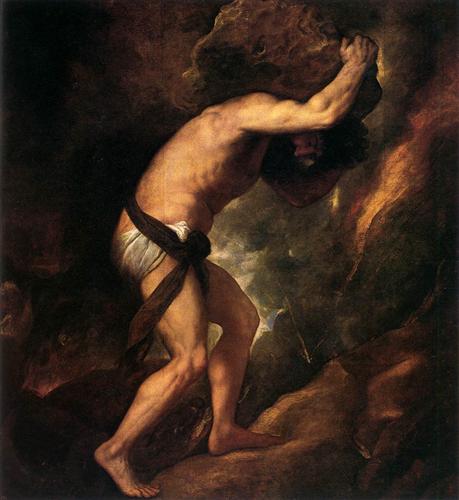
Thus, I offer that the human condition is not only the fact that we have to face an end, but also our futile efforts to stop that confrontation. We try to roll that boulder up to the top of the mountain, where release from our pain dangles before our eyes. In the end, we are crushed.

I wish I could show these people the better path and convince them to follow it. But I can't. Only God can.

He's the one offering, after all.

Monday, February 2, 2015

What Are We Going to Do About Vaccines?


First and foremost: vaccines don't cause autism. They just don't. There has never been any evidence to suggest so. The only thing that ever existed as supposed evidence of a link was one guy's study, which was proven to be completely fabricated. He even admitted that he lied. I'm not even going to bother linking to the information, as it's well-documented and easy to find. Vaccines and autism have nothing to do with each other.

With that out of the way, I move to the issue at hand. There's been some controversy lately, especially in right-wing circles, about vaccines and the tension between personal and governmental responsibility. Vaccines are an obviously good thing, but many misinformed and paranoid people are eschewing them. Should, then, the government coerce people into getting themselves and their children vaccinated?

Some have argued that vaccination is a matter of liberty, a personal choice. It may be incredibly wrong to avoid vaccines for no legitimate medical reason, but people have the right to exercise their liberty and make bad decisions. Just because you misuse your freedom doesn't mean it should be taken away.

That sounds like a good argument, until you consider the fact that vaccination's impact is not limited to the individual. If you refuse vaccination for yourself or your child, you not only increase personal risk, but expose other people that cannot receive vaccination for legitimate medical reasons (like infants) to unnecessary danger (look up "herd immunity" for a more detailed explanation). That "personal choice" ceases to be a matter of individual liberty when it directly endangers other individuals.

With this in mind, is it legitimate for the government to mandate vaccination (at least to a certain threshold) to protect its citizens? While I'm not completely convinced in either direction, I do believe there's a reasonable case that it should. The government's purpose is to protect its citizens' life, liberty, and property, those unalienable human rights. When an individual under that government's authority does something to infringe upon those rights of another individual (say, robbing him of his property), then (and only then) the government can legitimately use coercion to prevent or punish this. This is, on a basic level, why we have laws against murder, theft, kidnapping, and so on.

This is similar to the argument for outlawing or severely limiting abortion. Abortion is not merely a personal decision, but infringes on the right to life of another human. Thus, it is an illegitimate moral act that the government has a responsibility to prevent. The same goes for the natural law justification for war. The government can only take military action to protect its citizens from real threats to their lives and well-being.

So, then, it is possible to support government-mandated vaccination while still adhering to liberty as a right, because liberty cannot trump life. Still, having the federal government in control of yet another aspect of our lives will, rightly, leave a bad taste in people's mouths. It also may appear that the justification of forced vaccination is all too similar to the ones for Obamacare and other government encroachments on liberty.

My initial response is to propose a compromise. This issue, one could argue, falls under the Tenth Amendment, and is thus relegated to the states. There are already state laws in place requiring vaccination for children to attend public school, so state governments are certainly capable of handling this problem. If people dislike the laws of one state, they can make the decision to move to another one with more suitable policies. People do this all the time already for things like tax laws, so it would apply to this case as well. Though not a total guarantee that people won't still make terrible decisions about vaccines, letting the states handle it will, at least in theory, reconcile the priorities of safety and liberty concerning vaccination.

One thing the federal government could do is attempt to educate people on how vaccines work, their immense benefits to both the individual and society, and the real science behind what risks do actually exist for each kind of vaccine. Obviously, the hardcore deniers will still cling to their paranoia, saying, "that's just what you want me to think!" Still, information is a valuable tool against widespread stupidity.

So, in short: get your shots. Get your kids' shots. Hopefully the government won't have to do it for you.

Wednesday, January 21, 2015

The Actual State of the Union


I didn't watch President Obama's State of the Union address last night. I didn't read a transcript of it, and the only few snippets of its content I saw were from Twitter. I didn't care to hear or read it because I knew exactly what it would be: yet another political speech about how great America is and how great everything's going and how many things that actually aren't so great will be fixed somehow. It's a pretty meaningless endeavor.

I mean, really, what else is the President going to say? He isn't going to say that he failed in any area, or that his policies need to change, or that some problems are unsolvable. He has nothing to gain from honesty, at least in our political system. No President does. Honest appraisal isn't even close to being the top priority in a speech like this.

Nonetheless, the name of this particular speech would appear to require some kind of analysis of where our country really stands. Because it doesn't seem to be part of the President's job to actually do this, I humbly offer my own take on the status of the United States of America going into 2015.

This country is, I believe, in the midst of an ideological crisis. The United States was founded on principles of liberty. Over its 238-and-counting years of existence, the nation has struggled to walk the line between ordered liberty and licentiousness. How much freedom can be allowed without chaos? How much control can be wielded without tyranny? How much immorality can be permitted without a whole people losing morality entirely?

Never have these questions been more relevant since the founding era than today. Our modern nation struggles against itself. We have leaders who want guns only in the hands of police, but don't know how to prevent police from abusing authority. We have social activists who want government "out of the bedroom," yet want that same government to define what "consensual sex" is. We have an executive branch that wants to end terrorism without calling it that, fight wars that aren't wars, use the combined arms of social media trends and Predator drones to fight barbarism, and tell other powers what they can and can't do without saying what they do is wrong.

America, you need to decide what you are.

Are you going to be a country based on something, or based on nothing? Will you be a rock that weathers winds of change, or a kite that blows along with them? Are you going to be a state that controls people, or one that urges them to control themselves? Are you going to be the policeman of the world, or the sleeping giant that leaves things alone until provoked? Are you going to be the arbiter of morality, or the reflection of it?

Right now, we're trying to have it both ways. We can't keep doing this. It doesn't work. All we've succeeded in doing is making economic, foreign, social, and law enforcement policy more muddied, more complicated, more frustrating, more broken. No one knows what the rules are. No one knows who even makes the rules. It's a mess.

That's the real state our union is in. We're not only going in the wrong direction, we can't decide which wrong direction to go. If this keeps up, I predict disaster, not only for the conservatives who object, but for the progressives who have been steering the ship all this time.

I wonder if any politicians realize this. Even they do, I don't think they'd admit it. Certainly not in a speech on television.

Wednesday, January 14, 2015

Qu'est-ce que la liberté d'expression ?


On January 7th, Muslim terrorists shot up the offices of the French satirical magazine Charlie Hebdo, killing 12 people in retaliation for the depiction of Mohammed in cartoon form. Many Americans decried this violent act as an attack on free speech itself, and the hashtag #JeSuisCharlie reached historic popularity on Twitter. The magazine, for its part, printed its next cover with another depiction of Islam's founding Prophet. This cover is considered by many to be an act of defiance, and perhaps a dig at the sincerity of the publication's new-found supporters.

In the fallout from this horrific event, battle lines were drawn between those whose first instinct was to warn against retaliatory "Islamophobia"and those who insist this latest attack is further evidence that Islam is cancerous to humanity. Frankly, I fall more on the latter side. But while Islam is its own (enormous) issue, I want to discuss the supposed ultimate victim of the attack: free speech.

Free speech or freedom of expression is a huge priority in American and Western society. It's in the First Amendment, listed as an unalienable right that government may not infringe upon. So, what does it mean? Why is it so important? And why would someone want to attack it?

As to the first question, there's a substantial disagreement in this country about what freedom of speech should look like. While both the political Right and Left pay lip service to the idea that we the people should be able to hold and express any opinion, their respective reactions to what actually gets said paints a different picture. The Right wanted the offensive cartoons to be displayed without restriction, as evidenced by its mockery and derision of media outlets who censor the images, while the Left wants to use the massacre as a teaching moment in support of hate speech laws. One side wants speech to be unfettered and left to society to self-regulate, while the other wants concrete limitations in order to protect people from potential danger.

While complete freedom of speech leaves the door open for vile and offensive things to be strewn throughout the general public, I contend that speech that must meet legislative approval isn't free at all. Words can harm on an emotional and psychological level, but policing them is an impossible task, ethical questions aside. You can say whatever you want, it's when you start doing things that I become truly concerned.

All that said, just because someone can say whatever he wants doesn't mean he should say anything he wants. If one rejects governmental control over such matters, one must turn to self-control and personal responsibility. Some on the Left have implied that Charlie Hebdo brought this attack on themselves and, in a way, deserve their fate for their lack of restraint and foresight (note: I'm not saying they've actually said that the people deserved to die, nor that they really think that, but I believe that's a distasteful consequence of their argument), and that's wrong on the most basic level. The ones to blame for the attack are the ones who committed it. There is, however, something to be said for being able to communicate strongly without giving deliberate offense. Insulting for the mere sake of insult is irresponsible, immature, essentially meaningless, and ideally would be rare and disowned in society.

Of course, the world and its various societies are not ideal. The murderous attack is proof enough of that. That is why I have no wish to scold Charlie Hebdo for its offensiveness, whether it be toward Muslims, Catholics, Jews, or anyone else. This leads me to the question from earlier: why, out of the groups I just mentioned, are Muslims the ones who tend to react violently to offense? Muslims believe the mere depiction, much less the mockery, of their Prophet is blasphemy, and thus some choose to take, in their minds, justified revenge through violence. But this does not entirely explain it. The work of "art" known as "Piss Christ," for example, was created, displayed, and depicted throughout media, and no one died because of it. Playboy had a naked Virgin Mary cover, and no Catholics shot them. Something, then, is different about the Muslim faith, at least in some iteration of it.

These Muslims are not merely offended by certain forms of expression. That, I think, is where many Leftists make their fundamental mistake. They not only have their religious taboos, they have a vicious hatred of anyone who breaks them. They do not feel insult, they feel rage and zeal. Their faith, such as it may be, requires of them not forgiveness or even correction, but retribution.

This brings me to my conclusion. Freedom of speech can and often does result in offense. What happened on January 7th was not a result of mere offense. Therefore, the attack was not really on freedom of speech. It was on people. People who, through their printing of ridiculous cartoons, represented the other, the infidel, which cannot be tolerated. Those editors, artists, and writers became more than some Frenchmen with annoying gall; they became demonic in the eyes of their assailants, deserving no less than righteous fury and judgment.

The attack in Paris serves as a launching point for discussion of free speech and its consequences, but only secondarily. It was not expression that caused this fatal incident. It was something else entirely. I maintain that freedom of speech, however one defines it, is risky, scary, chaotic, perhaps even dangerous. But it is not deadly. To conclude that, I think, would be a huge mistake.

Friday, December 19, 2014

Could Everyone Just Be Quiet?

I'm already sick of the primaries.

You're probably thinking that's strange, it being the case that they haven't begun yet. To which I say, exactly.

A few days back, Senators Ted Cruz and Mike Lee, the dynamic duo of Congressional Stirring Up of Things, made a point of order after the "CRomnibus" bill vote for... some political gambit that I still haven't quite grasped. It wasn't long until Cruz, a potential 2016 Republican presidential candidate, was viciously attacked by conservative bloggers for supposedly giving Harry Reid a window to push through Democrat nominations that he would otherwise have had to forego (a notion which, as far as I understand it, is completely ridiculous). This prompted a Twitter war among conservative writers about "hero worship," "GOP establishment," and "RINOs."

Today, in response to Senator Marco Rubio's impassioned rebuke of Obama's Cuba policy, Senator Rand Paul made very mature and nuanced arguments in tweet form against Rubio's position. Rubio and Paul are, coincidentally, expected to be in the 2016 Republican presidential primary race.

Don't even get me started on Jeb Bush.

When I look at the lower-right corner of my screen, I notice something interesting. The current year is 2014. The primaries don't start until 2016, just over a year from now. Thus, the primaries, while not terribly far off, are not exactly imminent.

Why, then, is everyone screaming their heads off at each other?

I understand that elections don't exist in a vacuum; they take enormous amounts of preparation, which is why potential candidates are currently announcing their announcements about their intent to announce whether they will announce if they're campaigning or not. But for goodness's sake, do we have to be bursting blood vessels this early?

Writing scathing thought-pieces and insulting tweets is one of the more unproductive things I can think of at this juncture. Analysis of potential candidates and debate over important issues are all well and good, but the vast majority of what I see is just vitriol and chest-thumping. Is anyone really going to decide his vote based on what a Senator tweets today, or a conservative news site writes tomorrow? I certainly hope not. It would make the actual campaigns (you know, the ones that haven't started yet) rather extraneous.

I wrote on a similar topic last year, shaking my head then as I do now about the useless nature of this kind of political malarkey. I want to hear what Rubio, Cruz, Paul, Bush, Christie, Walker, and whoever else have to say about principles, issues, and policies, so I can make an informed vote based on how their statements line up with my own beliefs. I want to hear reasonable analysis from pundits I respect on the validity of those statements so that I might better judge them as part of my decision-making process. I don't want to hear more vapid insults. They turn me off immediately and make me disgusted with the entire process. They are not effective (except at increasing blood pressure all around), and they are not convincing.

I look forward to the campaign speeches, advertisements, and debates. The next election will be very important. Until then, I'd appreciate it if we could all just shut up for a while.

Tuesday, December 9, 2014

The Tragic, Dangerous Fall of Journalism

Under the Merriam-Webster.com entry for "journalism," definition 2-b reads: "writing characterized by a direct presentation of facts or description of events without an attempt at interpretation." This definition has been skewed in recent years, as activism and intent have found their way into mainstream journalistic endeavors. Still, so-called "advocacy journalism" is still supposed to present facts, things that are objectively true and verifiable, in order to achieve its end effectively.

This no longer appears to be the case.

Rolling Stone magazine published a piece by Sabrina Rubin Erdely about a brutal gang-rape incident on U-Va's campus. It was a startling and disturbing insight into depravity at an academic institution, the ensuing cover-up, and the horrible personal aftermath.

It was not true.

As the Washington Post and many other outlets have explained in great detail, the story is full of holes and represents a tremendous failure of fact verification and investigation by the reporter. Many of the problems would have been forestalled by reaching out to the accused culprits, the fraternity they supposedly belonged to, and many other involved parties. Erdely, apparently, did not make this effort. (Update: it's even worse than it first appeared)

This could have been an isolated instance of an overzealous reporter getting too wrapped up in her own story and overlooking her responsibility to present the truth. Alas, that would be too optimistic an interpretation.

The campus rape piece and its embarrassing collapse represent a distressing trend in contemporary journalism. Increasingly, reporting has been replaced with activism and facts have been replaced with narrative. The question many journalists now try to answer is not "what is true?" but rather "what is the story I want to tell?"

Don't just take my word for it. Read this quote and its source: "Ultimately, though, from where I sit in Charlottesville, to let fact checking define the narrative would be a huge mistake." Rolling Stone editor Will Dana has said that journalists should not "worship the grail of objectivity" and that "we'll write what we believe." And Zerlina Maxwell, in an opinion piece for the Washington Post, said: "Many people (not least U-Va. administrators) will be tempted to see this as a reminder that officials, reporters and the general public should hear both sides of the story and collect all the evidence before coming to a conclusion in rape cases... In important ways, this is wrong. We should believe, as a matter of default, what an accuser says." In that last link, notice the URL versus the headline; "generally" is a stealth-edit from the original "automatically."

The pervading mentality displayed here is that narrative trumps all. If it sounds like it confirms what you believe (or want to believe), then believe it, print it, spread it, take action on it. Don't stop to check what may actually be true, because that would damage the bigger picture, hurt the cause, and, Maxwell claims, harm victims of abuse and oppression.

This way of thinking is not limited to political or social journalism. The #GamerGate controversy, which started over allegations of corruption in gaming journalism, has ballooned into a widespread consumer revolt against "Social Justice Warrior" narratives in video game reviews and coverage (if you're unfamiliar with the issue, this is a good primer, though keep in mind it was written by supporters of the cause). Proponents of #GamerGate claim gaming journalism is tainted with political and social agendas, particularly radical feminism, and its critics have responded with accusations of misogyny.

In much the same way, those who have called for more thorough investigation of the U-Va rape story were accused of "rape-denialism" by radical feminist journalists such as Amanda Marcotte. Calling for adherence to honesty and objectivity is, according to such critics, akin to holocaust denial (I'd link directly to Marcotte's tweets on the subject, but she has blocked me on Twitter).

I could go on and on and on about instances of media bias and activist journalism. Examples abound. What the Rolling Stone debacle and everything else teach us is that when changing reality becomes the ultimate goal in a field that is supposed to depict it, truth is the inevitable casualty. This should frighten anyone concerned with knowing what is real. Jonathan Swift wrote in 1710: "besides, as the vilest writer hath his readers, so the greatest liar hath his believers: and it often happens, that if a lie be believed only for an hour, it hath done its work, and there is no farther occasion for it. Falsehood flies, and truth comes limping after it, so that when men come to be undeceived, it is too late; the jest is over, and the tale hath had its effect..." (from The Examiner No. XIV).

The effects of such falsehoods in journalism are twofold. First, the lie perpetuates belief in the agenda the false story supports, animating proponents of the author's own philosophy through emotional manipulation. It affirms such readers' conclusions on how the world works without prompting them to test and verify their views. People rely on journalism for knowledge, and when it is presented in these poorly founded, subjective ways, it hurts their ability to be rational beings.

Second, promoting falsities actually hurts the causes these activist journalists seek to promote. In the case of the rape story, it creates doubt of rape accusations in people burned by the faulty reporting. When the most heralded evidence of "rape culture" and supposed patriarchal oppression is false, it leads to the conclusion that there is no such thing. It's the classic case of the Boy Who Cried Wolf, only now it's the Journalist Who Cried Injustice. It trivializes real rape victims and makes an important, uncomfortable issue into a political chest-thumping exercise.

This is the cost of an ideology in which ends justify means and perceptions trump facts. Progressive thought is built on the notion of perpetually reconstructing reality, holding nothing permanent or certain, and holding no regard for anything that might stand in the way. When this way of thinking takes over something as important as journalism, disaster ensues.

Hopefully, the fallout from this mess will push reporters, writers, and editors to spend more time investigating the truth and less time constructing a narrative in the most emotionally appealing way. Hopefully, journalism will return to a presentation of facts, and stop being an avenue for personal agendas and vendetta. Hopefully, this once-proud, once-respectable field can be saved.

Given the prevalence of this problematic mentality, though? It might be too late.